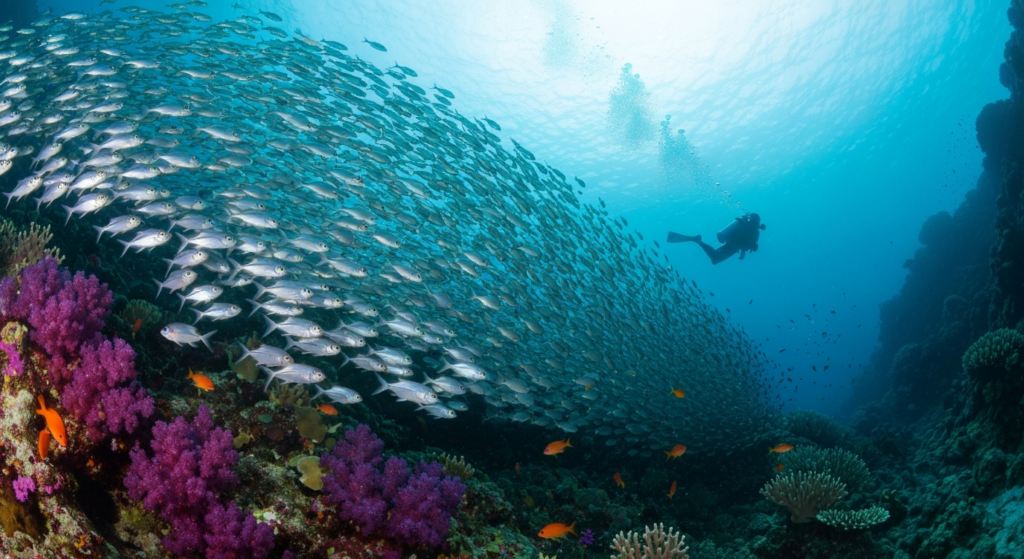
Why Raja Ampat Is the World’s #1 Dive Destination
Located in the heart of the Coral Triangle — the global epicenter of marine biodiversity — Raja Ampat encompasses over 40,000 square kilometers of marine territory containing 75% of all known coral species on Earth. This remote archipelago in West Papua, Indonesia, has been consistently ranked as the world’s premier diving destination by every major diving publication, including PADI, Scuba Diving Magazine, and Dive Magazine.
What makes Raja Ampat truly extraordinary is the sheer concentration of marine life. Marine biologists have documented over 1,500 fish species, 600 hard coral species (ten times the number found in the entire Caribbean), and 700 species of mollusks within its waters. The region’s geographic isolation, strong ocean currents carrying nutrient-rich water from the Pacific, and decades of community-led marine conservation have created an underwater paradise that remains largely pristine despite global coral bleaching events affecting reefs worldwide.

The 10 Best Dive Sites in Raja Ampat
After extensive research and consultation with experienced dive operators who have collectively logged over 10,000 dives across Raja Ampat, we have compiled the definitive guide to the archipelago’s most spectacular underwater locations. Each site is rated on biodiversity, visibility, accessibility, and overall diving experience.
Cape Kri
World record holder with 374 fish species counted on a single dive. Strong currents bring massive schools of barracuda, trevally, and reef sharks past vibrant coral walls. Depth: 5–30m. Level: Intermediate to Advanced.
Manta Sandy
A sandy cleaning station where reef manta rays gather for parasite removal. Up to 20 mantas visible at once during peak season (October–April). Depth: 10–18m. Level: All Levels.
Blue Magic
A submerged pinnacle rising from 30m to 7m, attracting grey reef sharks, whitetip sharks, giant trevally, and occasional manta rays. Dramatic topography. Depth: 7–30m. Level: Advanced.
Melissa’s Garden
Pristine hard coral garden in Penemu with table corals stretching as far as you can see. Schools of fusiliers and anthias create a kaleidoscope of color. Depth: 3–20m. Level: All Levels.
Sardine Reef
Named for the massive bait balls of sardines that attract tuna, mackerel, and reef sharks. The reef itself hosts pygmy seahorses and nudibranchs. Depth: 5–25m. Level: Intermediate.
The Passage
A narrow channel between Waigeo and Gam islands with mangrove-lined walls, soft corals, and unique freshwater-saltwater mixing creating surreal lighting. Depth: 2–18m. Level: All Levels.
Dive Site Comparison: Which Site Is Right for You?
Choosing the right dive site in Raja Ampat depends on your experience level, interests, and the season of your visit. Advanced divers seeking adrenaline-pumping encounters with pelagic species should prioritize Cape Kri, Blue Magic, and Boo Windows during the months of November through April when currents are strongest and visibility peaks at 25-30 meters. Meanwhile, photographers and marine life enthusiasts will find Melissa’s Garden and The Passage offer calmer conditions with extraordinary macro subjects including pygmy seahorses, ornate ghost pipefish, and over 20 species of nudibranchs.
For families and beginner divers, the sheltered reefs around Kri Island and Arborek Jetty provide gentle currents, warm 29°C water, and vibrant shallow reefs teeming with clownfish, parrotfish, and sea turtles at depths of just 3-12 meters. The Manta Sandy site is also suitable for beginners when accompanied by experienced guides, as the mantas hover at relatively shallow depths of 10-18 meters and are completely habituated to divers.
When to Dive Raja Ampat: Season Guide
Raja Ampat offers year-round diving, but conditions vary significantly between seasons. The peak diving season runs from October through April, coinciding with the dry season when visibility regularly exceeds 25 meters and water temperatures hover around 29-30°C. This period is also the best time for manta ray encounters at Manta Sandy and pelagic action at Blue Magic and Cape Kri.
The green season from May to September brings slightly reduced visibility (15-20 meters) but offers its own rewards: calmer seas, fewer liveaboards, and excellent macro diving. This period is particularly good for exploring the southern Misool area, where conditions remain relatively stable year-round. Water temperatures drop slightly to 27-28°C, and whale sharks occasionally make appearances in deeper channels between June and August.
How to Access the Best Dive Sites
Most of Raja Ampat’s premier dive sites are accessible exclusively by liveaboard, which allows divers to cover the vast distances between sites and access remote locations that day boats cannot reach. A typical 7-10 day liveaboard itinerary covers the Dampier Strait sites (Cape Kri, Manta Sandy, Blue Magic, Sardine Reef) in the first half, then moves south to explore Misool’s pristine reefs, Wayag’s dramatic karst seascapes, and hidden gems like Boo Windows and Magic Mountain.
For divers based at resorts or homestays on Kri Island, Arborek, or Gam, daily boat trips cover the central Dampier Strait dive sites within 15-45 minutes. This option works well for shorter trips of 3-5 days, though it limits access to southern Misool and northern Wayag sites. Several dive resorts operate dedicated dive centers with experienced local guides who know every coral head and cleaning station intimately, providing exceptional underwater experiences even within the more accessible central zone.
Conservation and Responsible Diving
Raja Ampat’s extraordinary marine biodiversity is protected by a network of Marine Protected Areas (MPAs) covering approximately 80% of the archipelago’s waters. Every visiting diver must purchase a Raja Ampat Marine Park Entry Permit, which costs IDR 1,000,000 (approximately USD $65) for international visitors and is valid for one calendar year. These funds directly support ranger patrols, mooring buoy maintenance, reef restoration projects, and community development programs in local Papuan villages.
Responsible diving practices are essential to preserving these fragile ecosystems. All dive operators in Raja Ampat enforce strict no-touch policies, prohibit glove use (to prevent reef contact), maintain maximum group sizes of 4-6 divers per guide, and use permanent mooring buoys to prevent anchor damage. Divers should maintain neutral buoyancy at all times, avoid using reef-toxic sunscreen before dives, and never chase or corner marine life. The community-managed patrol system known as “Sea Guardians” actively monitors dive sites and has been credited with reducing illegal fishing by over 90% since its establishment.
Frequently Asked Questions
What are the best dive sites in Raja Ampat for beginners?
The best dive sites for beginners in Raja Ampat include Arborek Jetty (shallow reef with friendly fish), Yenbuba Jetty (calm conditions with seahorses), Manta Sandy (gentle currents at the cleaning station), and Melissa’s Garden (pristine coral at easy depths of 3-12 meters). All these sites offer warm 29°C water, minimal current, and exceptional marine life encounters at shallow depths.
How much does diving in Raja Ampat cost?
Diving in Raja Ampat costs between $35-65 USD per dive when booked through local dive centers, or $3,500-15,000+ for all-inclusive liveaboard packages covering 7-14 days with 3-4 dives per day. Budget options include homestay-based diving from $35/dive on Kri Island, while luxury liveaboards like Dewi Nusantara or Damai II range from $7,000-15,000 per person for 10-12 day itineraries including all meals, equipment, and Nitrox.
When is the best time to dive Raja Ampat?
The best time to dive Raja Ampat is October through April (dry season), when visibility reaches 25-30 meters, water temperatures stay at 29-30°C, and manta ray encounters peak. November and December offer the best overall conditions with maximum visibility and calm seas. The May-September green season offers fewer crowds and good macro diving, though visibility drops to 15-20 meters.
Do I need a Marine Park Entry Permit to dive Raja Ampat?
Yes, all visitors to Raja Ampat Marine Protected Area must purchase an entry permit (PIN). As of 2026, the cost is IDR 1,000,000 (~$65 USD) for international visitors, valid for one calendar year. The permit can be purchased online through the official Raja Ampat MPA website or upon arrival at the Waisai harbor. This fee directly funds marine conservation, ranger patrols, and community development programs.
Can I see manta rays while diving in Raja Ampat?
Yes, manta ray sightings are virtually guaranteed at designated cleaning stations like Manta Sandy and Manta Ridge from October through April. During peak season, it is common to see 5-20 reef manta rays at a single cleaning station. Oceanic manta rays (the larger species with wingspans up to 7 meters) are occasionally spotted at Blue Magic and other offshore pinnacles. June through September offers fewer but still possible manta encounters.
Ready to Dive Raja Ampat?
Let our team design your perfect Raja Ampat diving adventure — from luxury liveaboards to boutique resort packages. Contact us for a personalized itinerary and expert guidance.