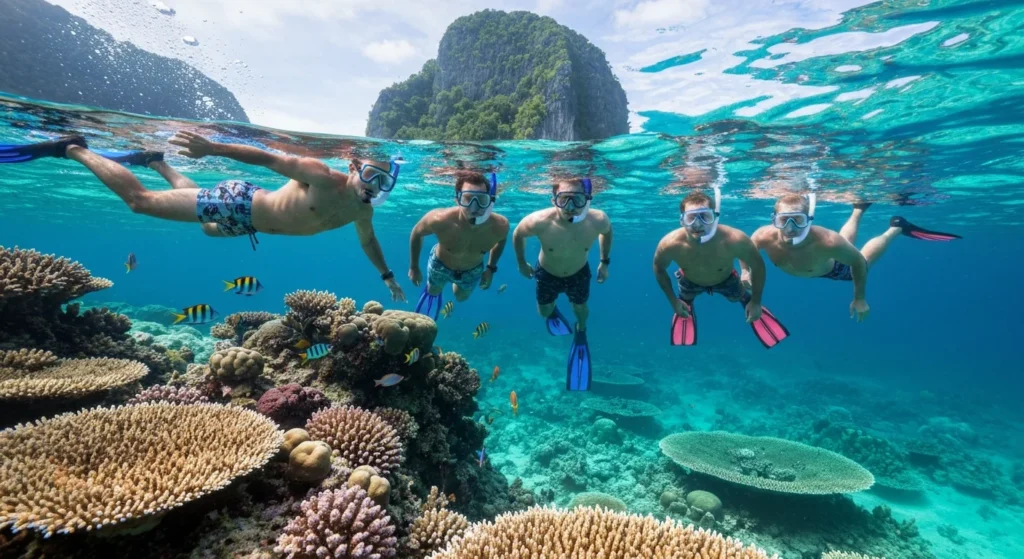
Manta Ray Diving Raja Ampat
Swimming with Giants: Raja Ampat’s Manta Rays
Few underwater encounters match the profound emotional impact of hovering weightless as a manta ray with a five-meter wingspan glides silently overhead, its ventral surface revealing unique spot patterns that scientists use to identify individual animals. Raja Ampat hosts one of the world’s densest populations of reef manta rays, with over 350 individually identified animals frequenting the archipelago’s cleaning stations, feeding areas, and transit corridors. The combination of nutrient-rich currents, abundant plankton, and healthy reef ecosystems creates ideal conditions for these magnificent creatures, making Raja Ampat one of the most reliable manta diving destinations on Earth. Unlike pelagic encounters where mantas appear briefly in open water, Raja Ampat’s cleaning stations allow extended observations of natural behavior — grooming, socializing, courtship displays, and feeding — in relatively shallow water accessible to all certification levels.

Best Manta Dive Sites
Manta Sandy
The classic — a shallow sandy bottom cleaning station at 12-17m in Dampier Strait. Mantas queue to be cleaned by wrasses. Calm conditions, suitable for all levels. Best November-April. Multiple mantas common, sometimes 10+ simultaneously.
Blue Magic
Submerged seamount at 7-30m with cleaning stations on the ridge. Stronger currents bring both mantas and grey reef sharks. Advanced divers recommended. Spectacular when mantas circle the pinnacle. Year-round potential.
Manta Ridge (Misool)
Southern Raja Ampat’s premier manta site at 10-22m. Less visited than Dampier sites, offering intimate encounters. Cleaning station on a coral ridge with excellent visibility. Best March-June. Occasional oceanic mantas with 6m+ wingspans.
Understanding Manta Behavior
Maximizing your manta diving experience requires understanding their behavior patterns and diving etiquette. Mantas visit cleaning stations — specific reef formations where small cleaner wrasses remove parasites from the mantas’ skin, gills, and mouths — on a predictable cycle influenced by tides, currents, and time of day. Incoming tides typically bring mantas to cleaning stations as plankton-rich water flows across the reef, stimulating both feeding and grooming behavior. At busy stations, mantas form orderly queues, circling above the cleaning area and descending in turn to hover over the cleaner fish. This predictable behavior allows experienced dive guides to position groups at observation points where mantas approach within arm’s reach without feeling pressured. Respectful observation means remaining still, controlling buoyancy precisely, avoiding flash photography, never touching or chasing mantas, and maintaining a minimum 3-meter distance unless a manta voluntarily approaches closer. These gentle giants are curious by nature and will often extend their time at cleaning stations when divers remain calm and non-threatening.
Manta Conservation in Raja Ampat
Raja Ampat has been at the forefront of manta ray conservation since declaring its waters a manta sanctuary in 2012, providing full legal protection for all ray species throughout the marine park. This protection, combined with active monitoring by marine researchers and community-based patrols, has allowed the resident manta population to thrive while populations elsewhere in Indonesia face pressure from targeted fishing and bycatch. The Marine Megafauna Foundation and Conservation International maintain ongoing photo-identification databases using the unique ventral spot patterns of each manta, tracking individual animals across years and sites to build understanding of population dynamics, migration patterns, and habitat use. Visiting divers contribute directly to this research — your photographs can be submitted to the Manta Matcher global database, potentially identifying new individuals or documenting the movements of known animals. The marine park entry permit fee you pay as a visitor funds patrol operations that enforce manta protection across the archipelago.
Frequently Asked Questions
When is the best time to dive with mantas in Raja Ampat?
November through April offers the highest encounter probability at Dampier Strait sites (Manta Sandy, Blue Magic). Misool sites peak March through June. Some encounters are possible year-round, but frequency drops significantly during June-September when many mantas migrate to deeper offshore waters.
What certification do I need for manta diving?
Manta Sandy is accessible to Open Water divers (12-17m depth, minimal current). Blue Magic and Manta Ridge require Advanced Open Water due to currents and depths exceeding 18m. Your dive guide will match site selection to your certification and experience level.
Can I photograph mantas during dives?
Yes, photography is welcomed and contributes to scientific research. Use ambient light or red-filtered strobes — flash photography can disturb mantas and cause them to leave the cleaning station. Wide-angle lenses are essential for capturing these large animals. Your guide will position you for optimal photo angles.
How close can I get to manta rays?
Raja Ampat’s code of conduct requires a minimum 3-meter distance unless a manta voluntarily approaches closer. However, at cleaning stations, mantas frequently swim within 1-2 meters of stationary divers, providing extraordinary close encounters initiated entirely by the animals themselves.
Dive with Manta Rays
Experience one of nature’s most awe-inspiring encounters. Our experts will plan your trip around peak manta season for maximum sightings.
Expert Guide: Manta Ray Diving Raja Ampat in Raja Ampat
Raja Ampat occupies a singular position in the world of marine travel — recognised not as one of the great destinations but as the definitive benchmark. With 1,500+ fish species, 600 hard coral varieties, and more endemic marine species per square kilometre than anywhere else on the planet, every experience here unfolds against a backdrop of unparalleled ecological significance. Understanding manta ray diving raja ampat in this context means appreciating an environment that has taken geological and evolutionary time to reach its current extraordinary state.
The 40,000 square kilometre Raja Ampat Marine Protected Area operates under one of the world’s most effective community-based conservation models. Revenue from marine park entry fees funds year-round patrol vessels, community ranger programmes, and scientific monitoring that have measurably increased fish biomass within protected zones by 40–60% since 2007. This conservation investment is directly experienced by every visitor — the density of marine life, clarity of water, and pristine condition of reefs here result from deliberate, sustained protection effort.
Key Planning Considerations
- Optimal season: October–April for calm seas and 25–40m visibility; diving continues year-round
- Marine park entry: USD 100 international / IDR 1,000,000 Indonesian — valid for 12 months
- Advance booking: Premium options require 6–12 months notice for peak October–April dates
- Water temperature: 27–30°C year-round; 3mm wetsuit sufficient for most activities
- Conservation commitment: Respect no-take zones, no-anchor reefs, and responsible wildlife interaction guidelines
Our specialist team at Juara Holding Group has operated in Raja Ampat since its emergence as an international destination. This depth of local knowledge — relationships with licensed operators, marine park authorities, and community organisations — translates into experiences unavailable through general travel agencies. We match each client’s specific objectives, time constraints, and budget to the exact combination of operators, vessels, and sites that delivers the best possible outcome. Contact our Raja Ampat division to begin planning your expedition.
Raja Ampat Fast Facts
1,500+
Fish species
600
Coral species
27–30°C
Water temperature
#1 Earth
Marine biodiversity