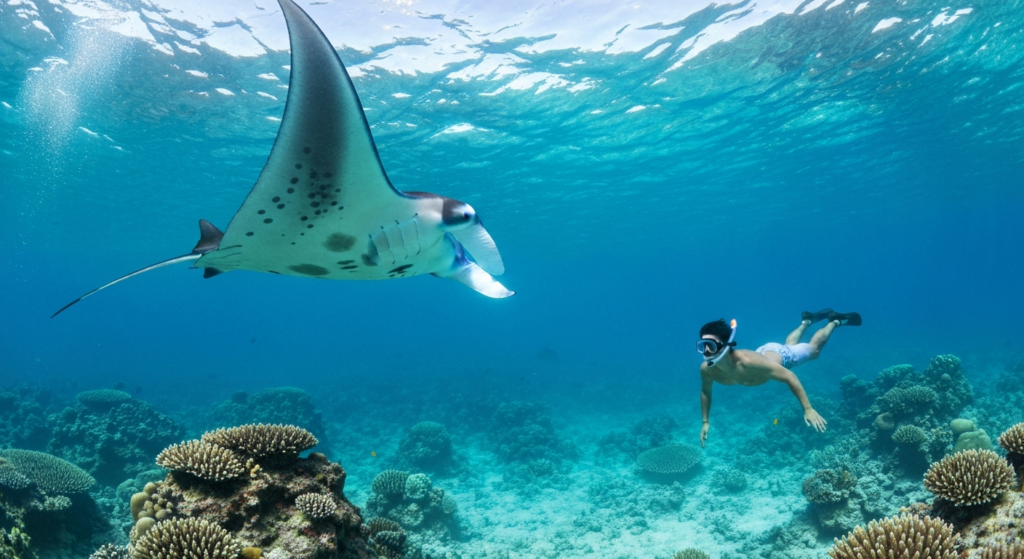
Face-to-Face with Gentle Giants
Snorkeling with manta rays ranks among the most profound wildlife encounters available on Earth, and Raja Ampat offers one of the most reliable and accessible settings for this experience. Unlike open-ocean encounters that require strong swimming skills and lucky timing, Raja Ampat’s manta cleaning stations bring these magnificent animals to predictable shallow-water locations where they linger for extended periods, allowing even novice snorkelers to observe their balletic movements from the surface. The sight of a manta ray with a 4-5 meter wingspan gliding silently beneath you — its cavernous mouth filtering plankton, its distinctive spot patterns visible through crystal-clear water — creates an emotional connection with the marine world that fundamentally changes how visitors perceive ocean conservation. In Raja Ampat, this encounter is not a rare stroke of luck but a near-certainty during peak season when guided by experienced local operators.

Best Manta Snorkeling Sites
Manta Sandy
Primary snorkeling site for mantas. Sandy cleaning station at 5-12m visible from surface. Mantas approach within 2-3m of floating snorkelers. Calm conditions most days. Suitable for all abilities with life jacket available. Peak Nov-Apr.
Arborek Area
Mantas feed in shallows near Arborek village during plankton blooms. Encounter depth 2-6m — exceptional surface viewing. Less predictable than Manta Sandy but more intimate when mantas present. Combined with village visit and reef snorkeling.
Yefnabi Kecil
Secondary cleaning station in Dampier Strait. Less visited, offering more private encounters when mantas present. 4-10m depth. Light current possible. Combined with Sawandarek Jetty snorkeling. Best Dec-Mar. Good alternative on busy days.
How Manta Snorkeling Works
A manta snorkeling excursion begins with a boat transfer to the cleaning station area, typically 15-45 minutes from your accommodation depending on location. Your guide assesses conditions — checking water clarity, current direction, and initial manta presence — before briefing the group on entry procedure, behavior protocols, and positioning strategy. Entry is gentle — a slow slide from the boat rather than a splash entry that might startle approaching mantas. Once in the water, the group maintains a stationary position at the surface above or adjacent to the cleaning station, floating quietly while mantas arrive, circle, and descend to the cleaning area below. Individual mantas may spend 5-30 minutes at the station, with multiple animals sometimes queuing in sequence during peak periods. Sessions typically last 45-90 minutes, with the guide managing group positioning to maintain optimal viewing angles as mantas shift their approach patterns. The key to successful manta snorkeling is patience and stillness — mantas are curious animals that approach calm observers voluntarily but retreat from aggressive pursuit or sudden movements.
Manta Encounter Guidelines
Raja Ampat’s marine park enforces strict guidelines for manta encounters that protect both animals and visitors. Maintain a minimum 3-meter distance unless a manta approaches you voluntarily — these gentle creatures often swim within arm’s reach of calm snorkelers. Never touch, chase, or attempt to ride a manta ray. Avoid blocking a manta’s path or swimming directly above one, which can be perceived as threatening. Use reef-safe sunscreen applied well before entering the water, as chemical sunscreen residue harms the microscopic organisms mantas feed upon. Flash photography is prohibited as it disturbs natural behavior patterns at cleaning stations. Snorkelers should remain at the surface rather than free-diving toward mantas, which causes them to abort cleaning station visits. These guidelines exist because mantas that associate humans with stress will abandon cleaning stations permanently, destroying the encounter opportunity for all future visitors. Following the rules protects the experience for everyone.
Frequently Asked Questions
Do I need to know how to swim to see mantas?
Basic floating ability with a life jacket is sufficient at calm sites like Manta Sandy. You float at the surface while mantas pass beneath you. Strong swimming skills are not required. However, comfort in open water and the ability to float relaxed for 30-60 minutes significantly enhances the experience.
What are the chances of actually seeing mantas?
During peak season (November-April), encounter rates at Manta Sandy exceed 80% on any given trip. Guides check conditions and manta presence before committing to the site, sometimes redirecting to alternative spots if the primary station is inactive. Multi-day visits increase encounter probability to near 100%.
Can children snorkel with manta rays?
Children aged 6+ who are comfortable in water can participate with appropriate life jacket and close supervision. The calm conditions at Manta Sandy are suitable for young snorkelers. Guides provide extra attention to young participants. The experience often becomes a defining childhood memory.
Are manta rays dangerous?
No. Manta rays have no stinger, no teeth capable of harming humans, and no aggressive behavioral patterns. They are filter feeders consuming plankton and small fish. Their large size can be initially intimidating, but mantas are gentle, intelligent animals that show curiosity toward calm human observers.
Snorkel with Manta Rays
One of Earth’s most extraordinary wildlife encounters — no diving certification needed. We’ll time your visit for maximum manta activity.