The People of Raja Ampat: Ancient Cultures in a Modern World
Long before Raja Ampat became famous for its marine biodiversity, these islands were home to indigenous Papuan communities whose relationship with the ocean spans millennia. The approximately 50,000 people who inhabit Raja Ampat’s scattered villages represent several distinct ethnic groups—primarily the Maya, Biak, and Betew peoples—each maintaining unique cultural identities, languages, and traditions while sharing a common bond with the sea that sustains them. Understanding Raja Ampat’s culture adds immeasurable depth to any visit, transforming a diving holiday into a genuine cross-cultural encounter.
The name “Raja Ampat” itself carries deep cultural significance. According to local legend, a woman discovered seven eggs, four of which hatched into kings who became rulers of the four main islands—Waigeo, Misool, Salawati, and Batanta. The remaining three eggs became a ghost, a woman, and a stone. This origin myth, passed down through generations of oral tradition, reflects the Papuan worldview in which natural phenomena and human governance are intimately connected. The four kingdoms that gave the archipelago its name maintained complex social hierarchies, trade networks, and diplomatic relationships long before European contact.

Traditional Village Life
Arborek Village
A model eco-tourism village on a tiny island near Kri. Known for exceptional handicrafts, warm hospitality, and a pristine house reef. Visitors can watch traditional hat-weaving demonstrations and join community dances.
Sawinggrai Village
Famous as the best location to observe Wilson’s Bird-of-Paradise in the wild. Local guides lead dawn treks into the forest canopy. The village also features traditional stilt houses built over the water.
Friwen Village
Home to the spectacular Friwen Wall dive site right off the village jetty. The community has embraced homestay tourism, offering visitors authentic experiences of daily Papuan life while maintaining traditional fishing practices.
Cultural Traditions & Ceremonies
Raja Ampat’s cultural traditions are woven into the fabric of daily life rather than performed solely for tourist entertainment. The most significant cultural institution is the sasi system—a traditional resource management practice that demonstrates sophisticated ecological understanding developed over centuries. When a village elder declares sasi on a particular reef or fishing ground, all harvesting ceases for a designated period, allowing marine populations to recover. This practice, predating Western conservation science by generations, is now formally recognized in Indonesian law and integrated into modern marine park management.
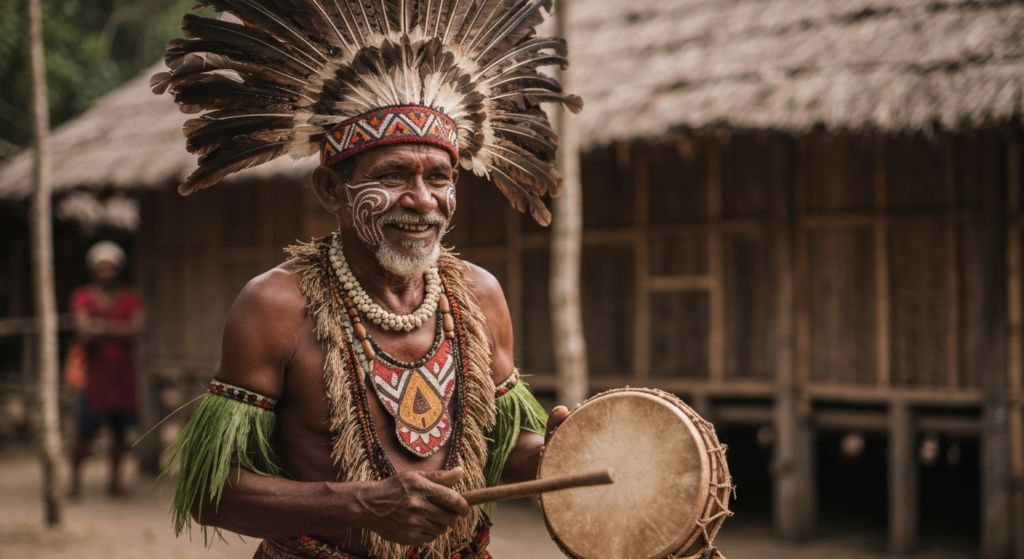
Music and dance hold central importance in Papuan culture. Traditional performances feature rhythmic chanting accompanied by tifa drums—hand-carved instruments that produce deep, resonant tones carrying across the water. War dances, once performed before inter-village conflicts, have evolved into celebratory performances marking important community events, visitor arrivals, and seasonal transitions. The intricate body painting and feathered headdresses worn during these ceremonies reflect artistic traditions passed down through countless generations.
Wood carving represents another vital cultural expression. Raja Ampat’s master carvers create elaborate ancestor poles, ceremonial shields, and decorative panels featuring stylized representations of marine life, birds, and ancestral spirits. The carving tradition connects communities to their spiritual heritage—many carved objects serve as repositories for ancestral power and are treated with deep reverence. Visitors can observe carving workshops in several villages and purchase authentic pieces directly from artisans, providing important cultural economy income.
Ancient Rock Art & Archaeological Heritage
Raja Ampat harbors one of Southeast Asia’s most remarkable archaeological treasures—hand stencil rock art dating back approximately 5,000 years. Found primarily in the limestone caves and overhangs of Misool Island, these ancient paintings depict human hands, marine creatures, and geometric patterns created using natural pigments blown through hollow reeds. The rock art sites provide tangible evidence of human habitation spanning millennia and suggest that Raja Ampat’s marine resources have attracted human communities since prehistoric times.
The most accessible rock art sites are located in the Tomolol area of Misool, where sheltered limestone overhangs display hundreds of hand stencils in red, white, and black pigments. Some panels include depictions of fish, turtles, and other marine life, suggesting that the artists’ relationship with the ocean was as central to their identity as it is to modern Raja Ampat communities. These sites are sacred to local communities and should be visited with appropriate respect—touching the paintings or leaving any trace of your visit is strictly prohibited.
Responsible Cultural Tourism
Engaging with Raja Ampat’s communities requires sensitivity and respect. Unlike commercialized cultural tourism destinations, Raja Ampat’s villages are living communities where families raise children, elders teach traditions, and daily life continues regardless of visitor presence. Asking permission before photographing people, dressing modestly when visiting villages, and bringing small gifts (school supplies, fishing line) rather than cash demonstrates respect and strengthens positive relationships between visitors and communities.
Homestay accommodation offers the most authentic cultural immersion, with visitors sleeping in family homes, sharing meals of freshly caught fish and sago, and participating in daily activities from fishing to cooking. Many homestay hosts speak limited English, creating communication challenges that are best met with patience, humor, and genuine curiosity. Learning a few words of Bahasa Indonesia—terima kasih (thank you), permisi (excuse me), bagus sekali (very beautiful)—opens doors and hearts throughout the archipelago.
Frequently Asked Questions
What language do people speak in Raja Ampat?
Raja Ampat’s population speaks Bahasa Indonesia as the common language, along with several local Papuan languages including Maya, Biak, and Betew dialects. In tourism areas, basic English is increasingly common among guides and homestay operators. Learning a few Indonesian phrases greatly enhances cultural interactions during your visit.
Can I visit traditional villages in Raja Ampat?
Yes, several villages welcome visitors including Arborek, Sawinggrai, Friwen, and Yenbeser. Village visits typically include cultural performances, handicraft demonstrations, and guided walks. Always arrive with a local guide who can facilitate introductions, and bring appropriate gifts such as school supplies for children rather than candy or cash.
What are the cultural etiquette rules for visitors?
Key cultural guidelines include: dress modestly in villages (cover shoulders and knees), ask permission before photographing people, remove shoes when entering homes, accept offered food and drink graciously, avoid pointing with your index finger (use an open hand), and do not touch sacred objects or rock art sites. Your guide can advise on specific protocols for each village.
Is it safe to visit Papuan communities?
Raja Ampat’s communities are overwhelmingly welcoming and hospitable to visitors. The archipelago has an excellent safety record for tourists, and village visits are consistently rated as highlights of Raja Ampat trips. Local guides facilitate smooth introductions and cultural exchanges, ensuring comfortable interactions for both visitors and community members.
Experience Authentic Papuan Culture
Include village visits and cultural experiences in your Raja Ampat itinerary.