Why Raja Ampat Is the World’s #1 Diving Destination
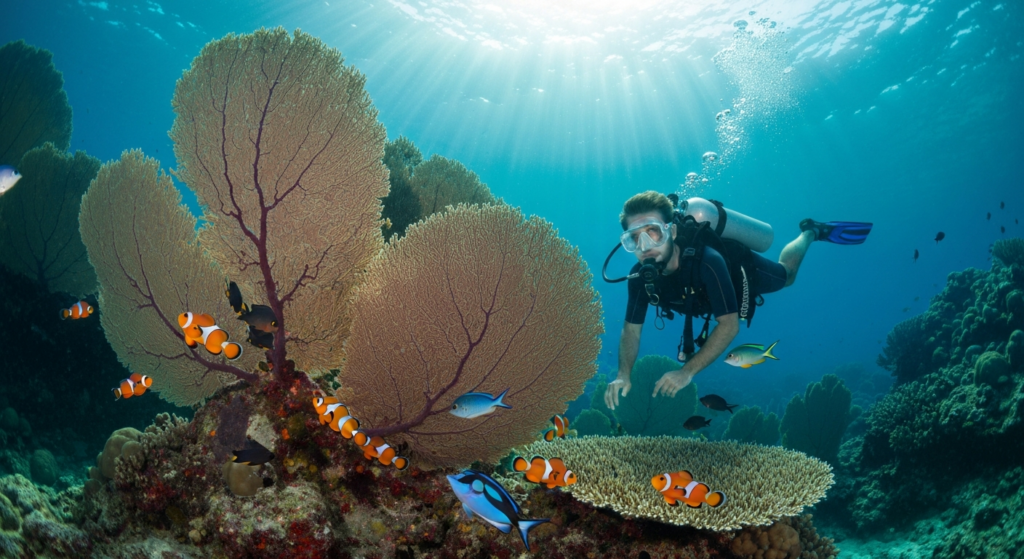
Raja Ampat sits at the epicenter of the Coral Triangle, the global heart of marine biodiversity. Scientists have documented more species per square meter here than anywhere else on Earth. The archipelago’s 40,000+ square kilometers of marine territory harbor pristine coral reefs that have remained largely untouched, making every dive an encounter with marine life density that simply cannot be matched elsewhere. From pygmy seahorses hiding on gorgonian fans to massive schools of barracuda spiraling in the blue, Raja Ampat delivers a sensory overload that transforms even the most experienced divers. The combination of nutrient-rich currents from the Pacific and Indian Oceans creates a constant flow of plankton that attracts everything from reef fish to pelagic giants, ensuring every dive tells a different story.

Top Dive Sites in Raja Ampat
Raja Ampat’s dive sites span four major island groups — Waigeo, Batanta, Salawati, and Misool — each offering distinct underwater topography and marine encounters. The northern sites around Dampier Strait deliver powerful currents teeming with pelagic life, while the southern Misool region showcases pristine soft coral gardens draped over limestone karst formations. Whether you seek adrenaline-pumping drift dives or meditative macro explorations, the archipelago has sites perfectly suited to every diving style and experience level.
Cape Kri
World record holder for most fish species counted on a single dive — 374 species. Strong currents bring massive schools of sweetlips, fusiliers, giant trevally, and reef sharks along a sloping reef wall that drops into the deep blue of Dampier Strait.
Blue Magic
A submerged seamount rising from 30m where manta rays glide through cleaning stations, grey reef sharks patrol the drop-offs, and massive schools of barracuda form mesmerizing tornado formations in the nutrient-rich currents.
Manta Sandy
A shallow sandy bottom cleaning station at 12-18 meters where oceanic manta rays with wingspans exceeding 5 meters queue up for cleaning. One of the most reliable manta encounters in all of Indonesia, accessible to all certification levels.
Diving Conditions and Best Season
Raja Ampat offers year-round diving with water temperatures between 27-30°C (80-86°F), meaning a 3mm wetsuit is sufficient for most divers. Visibility ranges from 10-30 meters depending on location, currents, and season. The best diving conditions generally occur from October through April, when calmer seas and clearer waters prevail across most sites. However, the manta ray season in the northern sites peaks from November through April, while Misool’s best conditions run from March through June. Current strength varies dramatically between sites — from gentle drift at Sawandarek Jetty to powerful washing-machine currents at Shotgun and The Passage. Professional dive operators carefully match sites to diver experience levels and conditions, ensuring safe and spectacular dives regardless of when you visit.
Dive Packages and What to Expect
Diving in Raja Ampat is available through three primary formats: land-based dive resorts, liveaboard vessels, and day-trip operations from Waisai or homestays. Land-based resorts typically offer 2-4 dives per day with boat transfers to nearby sites, comfortable surface intervals at the resort, and flexibility to mix diving with island exploration. Liveaboard trips range from 7-14 nights and cover the widest territory, accessing remote sites in both the Dampier Strait and Misool regions that land-based operators cannot easily reach. Day-trip diving from Waisai targets accessible sites within 30-60 minutes by speedboat and suits travelers on shorter schedules. Most dive packages include full equipment rental, certified PADI guides, marine park permits assistance, and surface interval refreshments. Nitrox is available at most professional operations for an additional fee, extending bottom times on the nutrient-rich reefs.
Certification Levels and Requirements
While many of Raja Ampat’s top sites require Advanced Open Water or equivalent certification due to currents and depths, several world-class sites welcome Open Water divers. Sawandarek Jetty, Yenbuba Jetty, and Friwen Wall offer sheltered conditions with minimal current and depths under 18 meters, yet still deliver the stunning biodiversity that defines Raja Ampat diving. For non-certified visitors, several operators offer Discover Scuba Diving experiences in protected lagoons with calm, clear water. Experienced technical divers can arrange deep dives, cave penetrations, and extended decompression dives at select sites with specialized operators. All dive centers operating in Raja Ampat maintain PADI or SSI certification, carry emergency oxygen, and coordinate with the local hyperbaric chamber for safety protocols.
Marine Park Entry Permit
All divers must purchase a Raja Ampat Marine Park Entry Permit (PIN) before diving. The current fee is IDR 1,000,000 (approximately USD $65) for international visitors and IDR 500,000 for Indonesian nationals, valid for one calendar year. Permits can be purchased at the Marine Park Authority office in Waisai upon arrival or online through the official registration system. This fee directly funds marine conservation, community patrol programs, and reef restoration projects throughout the archipelago. Most dive operators will assist with permit acquisition as part of their package services, ensuring a seamless arrival process.
Frequently Asked Questions
What certification do I need to dive in Raja Ampat?
Most popular dive sites require PADI Advanced Open Water or equivalent certification due to currents and depths exceeding 18 meters. However, several exceptional sites like Sawandarek Jetty and Yenbuba are suitable for Open Water divers, and Discover Scuba Diving experiences are available for complete beginners in protected areas.
When is the best time to dive Raja Ampat?
October through April offers the calmest seas and best overall conditions. Manta ray encounters peak from November through April in northern sites, while Misool diving is best from March through June. Diving is available year-round with water temperatures consistently between 27-30°C.
How much does diving in Raja Ampat cost?
Diving packages typically range from $50-150 per dive depending on the operator type. Land-based resort packages start around $150-300 per day including 2-3 dives, accommodation, and meals. Liveaboard trips range from $300-700 per day all-inclusive. Budget options through homestay-based operators start around $50-80 per dive with equipment rental.
Is Raja Ampat diving suitable for beginners?
Yes, with proper site selection. Several world-class sites have calm conditions suitable for newly certified divers. Professional operators match sites to experience levels, and Discover Scuba Diving programs introduce non-certified visitors to the underwater world in safe, shallow environments.
Do I need to bring my own diving equipment?
Full equipment rental is available at all dive operators, though experienced divers often bring personal masks, computers, and wetsuits for comfort. Most operators maintain well-serviced Aqualung or Scubapro equipment. Nitrox fills are available at premium operations for enhanced bottom time on repetitive dive days.
Book Your Raja Ampat Diving Adventure
From world-record reefs to manta ray encounters — experience diving at its absolute finest. Our experts will design the perfect dive itinerary for your skill level.