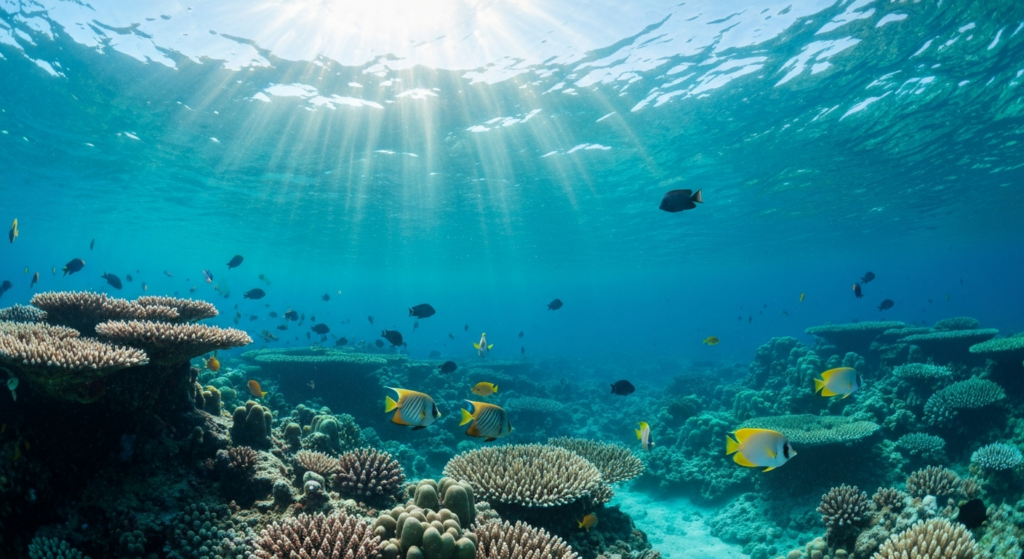
Year-Round Diving, Seasonal Highlights
Raja Ampat’s position straddling the equator at 0-2 degrees south latitude creates a tropical maritime climate with remarkably consistent water temperatures and marine life activity throughout the year. Unlike temperate diving destinations with dramatic seasonal shutdowns, Raja Ampat offers genuine diving opportunities in every calendar month. However, distinct seasonal patterns in weather, currents, marine life behavior, and site accessibility create meaningful differences in the diving experience across the year. Understanding these patterns allows you to time your visit for the specific experiences you prioritize most — whether that’s manta ray encounters, maximum site access, underwater photography conditions, or budget optimization.

Season Overview
Peak: Oct-Apr
Calm seas, 15-30m visibility, all sites accessible. Manta rays at cleaning stations. Peak tourism, highest prices, best weather. Water 28-30°C. Book 6-12 months ahead. Best for: first-timers, manta encounters, photography.
Shoulder: May & Sep
Transitional weather, good diving at most sites. Reduced tourism, 10-20% price drops. Some exposed sites limited. Water 27-29°C. Excellent value window. Best for: experienced divers, budget-conscious, fewer crowds.
Quiet: Jun-Aug
Southeast monsoon brings rougher seas to some areas. Sheltered sites remain excellent. 20-35% price reductions. Some liveaboards relocate. Water 27-28°C. Best for: budget divers, macro enthusiasts, solitude seekers.
Month-by-Month Diving Conditions
October marks the traditional start of Raja Ampat’s peak diving season as southeast monsoon winds die down and seas flatten across the archipelago. Visibility improves rapidly as settled conditions reduce plankton blooms, and manta rays begin returning to cleaning stations in the Dampier Strait. November through January represents the absolute sweet spot — flat calm seas, maximum site accessibility, peak manta activity, and excellent visibility averaging 20-25 meters. These months also see the highest tourism activity and premium pricing. February through April maintains excellent conditions with slight variations: visibility can spike to 30+ meters on good days, and the transition toward southern Misool’s best season begins. May serves as a shoulder month where conditions remain good but begin shifting as southeast trade winds increase. June through August brings the southeast monsoon — rougher conditions at exposed sites, reduced visibility from increased plankton, but sheltered locations like Sawandarek, Yenbuba, and the Fam Islands continue offering spectacular diving. September sees conditions improving as winds shift, leading back into the October peak season start.
Marine Life Calendar
Different marine species follow seasonal patterns that can guide your travel timing. Reef manta rays concentrate at Dampier Strait cleaning stations from November through April, with peak numbers in December-February. Whale sharks appear sporadically but most reliably in southern Misool between March and June, attracted by seasonal plankton blooms. Walking sharks, unique to Raja Ampat, are visible year-round on night dives but are most active during new moon phases when darker nights encourage their hunting behavior. Mass coral spawning events typically occur several nights after the full moon in March or April, creating a once-a-year underwater spectacle. Pygmy seahorses, nudibranchs, and other macro subjects are present year-round at all sites. The general principle holds that nutrient-rich periods (plankton blooms during monsoon transitions) attract more pelagic activity, while calm, clear periods favor reef exploration and photography.
Frequently Asked Questions
Can I dive Raja Ampat in July or August?
Yes, diving continues year-round. June-August conditions at sheltered sites remain excellent with water temperatures of 27-28°C. Some exposed sites may be inaccessible during strong southeast winds, but experienced operators maintain diverse site portfolios ensuring quality diving regardless of season.
What water temperature should I expect?
Surface temperatures range from 27-30°C year-round. Thermoclines at deeper sites can drop to 24-26°C below 25 meters, particularly during upwelling events. A 3mm full wetsuit is sufficient for most divers; temperature-sensitive divers may prefer 5mm for deeper or longer dives.
When is visibility best?
November through February typically offers the clearest water with visibility averaging 20-25 meters and occasional 30+ meter days. Plankton-rich periods during monsoon transitions reduce visibility to 10-15 meters but increase marine life activity. Many experienced divers actually prefer plankton-rich conditions for the abundance of marine encounters.
Is there a typhoon risk in Raja Ampat?
No. Raja Ampat sits near the equator, south of the typhoon belt that affects the Philippines and northern Pacific. Tropical cyclones do not form at these latitudes. Weather disruptions are limited to monsoon-related wind and swell patterns, which are predictable and manageable with experienced local operators.
Plan Your Diving Season
Let our experts help you choose the perfect month for your Raja Ampat diving priorities — mantas, visibility, budget, or marine life events.