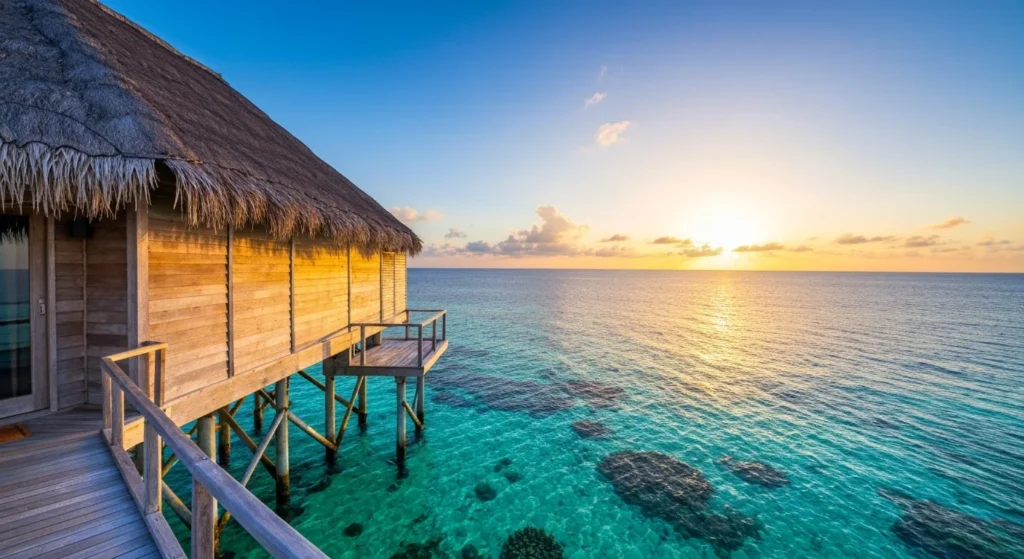
Overwater Bungalows Raja Ampat
Sleeping Above the Reef
Overwater bungalows are the signature accommodation style of Raja Ampat, and for compelling practical reasons beyond aesthetics. Building on stilts over shallow reef flats minimizes land clearing on small islands, provides natural cooling through ocean breezes beneath the floor, and places guests directly above the marine ecosystems they’ve traveled to experience. At every price point — from simple village homestay rooms to premium resort villas — the fundamental experience is the same: falling asleep to the sound of waves lapping against wooden pylons while reef fish hunt beneath your floor, and waking to dawn light reflecting off turquoise water onto your ceiling. This direct connection between accommodation and marine environment is unique to Raja Ampat’s overwater properties, distinguishing them from overwater developments in the Maldives or Bora Bora where bungalows sit over sandy lagoons rather than living coral reefs.

Overwater Options by Budget
Village Overwater ($30-80)
Simple wooden rooms on stilts in homestay villages. Basic furnishing, shared/private bathroom, 3 meals included. Direct reef access. Arborek, Friwen, Yenbuba villages. Authentic experience, genuine marine connection. Budget-friendly.
Mid-Range Water Bungalow ($150-350)
Purpose-built dive resort water bungalows. Private bathroom, fan or AC, private deck with reef view. All-inclusive with diving. Papua Paradise, Waiwo, Papua Explorers. Good comfort-to-value ratio with excellent house reef access.
Luxury Water Villa ($400-1,200)
Premium overwater suites with glass floor panels, private sundecks, outdoor showers, king beds. Misool Resort, Meridian Adventure. Gourmet dining, spa, dedicated dive operation. Ultimate overwater luxury above pristine reef systems.
The Overwater Lifestyle
Living above the water in Raja Ampat establishes a rhythm entirely different from land-based accommodation. Morning begins with the reef awakening — small fish emerge from coral hiding spots, larger predators make their dawn patrol, and the water transitions from dark pre-dawn to the vivid turquoise that defines Raja Ampat photography. Many guests develop a morning ritual of reef checking from their deck before breakfast, scanning for turtles, sharks, or unusual species that passed during the night. At luxury properties, glass floor panels allow reef observation from bed — guests report watching octopus hunting beneath their room while enjoying morning coffee. Midday sees the reef at its most colorful as overhead sun illuminates coral formations and the full spectrum of fish colors becomes visible. Afternoon provides optimal conditions for direct access snorkeling — simply descend your bungalow stairs into the water for unlimited private reef exploration. Evening transforms the experience as the reef’s nocturnal shift begins — bioluminescent organisms spark in disturbed water, hunting sharks become active, and the soundscape shifts from daytime fish activity to the subtle clicks and pops of nocturnal reef life audible through the wooden floor.
Choosing Your Overwater Property
Several factors beyond price determine the quality of an overwater experience. Reef quality beneath the bungalow varies dramatically — some properties sit over healthy, dense coral with abundant fish life, while others are positioned over sand or degraded reef offering minimal marine interest. Ask specifically about the house reef when booking and request photographs of underwater conditions. Bungalow orientation affects both views and environmental comfort — west-facing rooms capture stunning sunsets but receive afternoon heat, while east-facing rooms enjoy cool morning breezes and dawn light. Distance from the main island affects both privacy and convenience — bungalows at the end of a long jetty offer maximum tranquility but longer walks to restaurant and dive facilities. Structural quality matters for comfort — well-built overwater rooms minimize floor flex, reduce wave noise during rough weather, and maintain dry interiors during rain. Newer constructions generally outperform older bungalows on these practical dimensions.
Frequently Asked Questions
Is it safe to sleep over the water?
Yes, overwater bungalows in Raja Ampat are a well-established accommodation format with decades of safe operation. Structures are built on substantial hardwood pylons anchored in reef substrate. Safety railings prevent accidental falls. The calm, shallow waters beneath bungalows present no drowning risk even if someone entered the water accidentally.
Can I snorkel directly from my overwater bungalow?
At most properties, yes — stairs or ladders descend directly into the water from your deck or a nearby platform. This is one of the primary advantages of overwater accommodation. Confirm direct water access when booking, as some bungalows may require a short walk to designated entry points.
Are overwater bungalows suitable for families with young children?
Most overwater bungalows include deck railings suitable for children, but close supervision is essential near water access points. Some properties offer family bungalows with additional safety features. Children aged 4+ generally enjoy the overwater experience. Properties with beach-adjacent alternatives may be preferable for families with toddlers.
Do overwater bungalows have air conditioning?
Budget homestay rooms typically rely on natural ventilation and fans. Mid-range resort bungalows offer fan or AC options. Luxury properties provide full air conditioning. The ocean breeze through overwater structures provides effective natural cooling for much of the year, and many guests prefer open windows to the sound and feel of the ocean environment.
Book Your Overwater Stay
Sleep above the reef in Raja Ampat’s signature accommodation. From village authenticity to resort luxury — all above crystal waters.
Expert Guide: Overwater Bungalows Raja Ampat in Raja Ampat
Raja Ampat occupies a singular position in the world of marine travel — recognised not as one of the great destinations but as the definitive benchmark. With 1,500+ fish species, 600 hard coral varieties, and more endemic marine species per square kilometre than anywhere else on the planet, every experience here unfolds against a backdrop of unparalleled ecological significance. Understanding overwater bungalows raja ampat in this context means appreciating an environment that has taken geological and evolutionary time to reach its current extraordinary state.
The 40,000 square kilometre Raja Ampat Marine Protected Area operates under one of the world’s most effective community-based conservation models. Revenue from marine park entry fees funds year-round patrol vessels, community ranger programmes, and scientific monitoring that have measurably increased fish biomass within protected zones by 40–60% since 2007. This conservation investment is directly experienced by every visitor — the density of marine life, clarity of water, and pristine condition of reefs here result from deliberate, sustained protection effort.
Key Planning Considerations
- Optimal season: October–April for calm seas and 25–40m visibility; diving continues year-round
- Marine park entry: USD 100 international / IDR 1,000,000 Indonesian — valid for 12 months
- Advance booking: Premium options require 6–12 months notice for peak October–April dates
- Water temperature: 27–30°C year-round; 3mm wetsuit sufficient for most activities
- Conservation commitment: Respect no-take zones, no-anchor reefs, and responsible wildlife interaction guidelines
Our specialist team at Juara Holding Group has operated in Raja Ampat since its emergence as an international destination. This depth of local knowledge — relationships with licensed operators, marine park authorities, and community organisations — translates into experiences unavailable through general travel agencies. We match each client’s specific objectives, time constraints, and budget to the exact combination of operators, vessels, and sites that delivers the best possible outcome. Contact our Raja Ampat division to begin planning your expedition.
Raja Ampat Fast Facts
1,500+
Fish species
600
Coral species
27–30°C
Water temperature
#1 Earth
Marine biodiversity