Expedition Cruising Through Paradise
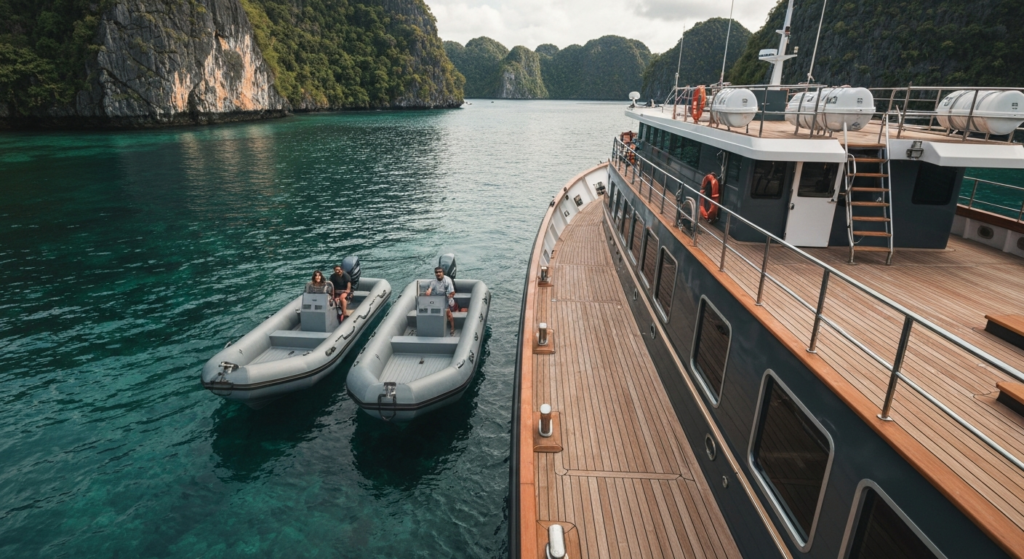
Small ship cruises offer a fundamentally different Raja Ampat experience from liveaboards or resort stays, combining the mobility of a vessel-based expedition with the comfort and social atmosphere of a luxury cruise. These purpose-built expedition ships carry 20-100 passengers in private staterooms with en-suite facilities, offering restaurant-style dining, lecture facilities, multiple outdoor observation decks, and fleets of Zodiac tenders for shore excursions and water activities. The expedition cruise format appeals to travelers who want comprehensive Raja Ampat coverage without the intensity of a dive-focused liveaboard or the geographical limitations of a fixed resort. Professional naturalist guides and marine biologists accompany every voyage, transforming each island visit, snorkeling session, and wildlife sighting into an educational experience that deepens understanding of Raja Ampat’s ecological significance and conservation challenges.

Cruise Experiences
Naturalist Expeditions
Focus on wildlife, ecology, and conservation. Expert biologists lead excursions. Bird of paradise treks, marine surveys, village ethnography. Snorkeling and kayaking daily. Lectures and workshops aboard. $500-800/day. Best for: nature enthusiasts, photographers.
Luxury Expeditions
Premium vessels with spa, gourmet dining, butler service. Zodiac excursions, snorkeling, optional diving. Private beach setups, wine tastings, sunset cocktails. $1,000-1,500/day. Best for: luxury travelers wanting effortless exploration.
Adventure Cruises
Active itineraries: diving, kayaking, paddleboarding, hiking, village visits. Smaller vessels (20-40 pax) reaching intimate anchorages. Equipment included. $600-1,000/day. Best for: active travelers seeking diverse daily activities.
What Sets Small Ship Cruises Apart
The small ship format brings specific advantages for Raja Ampat exploration that larger cruise vessels cannot match. Draft limitations allow these vessels to navigate shallow channels and anchor in protected lagoons inaccessible to conventional cruise ships. Passenger counts under 100 enable landing at pristine beaches and small villages without overwhelming fragile environments or shy communities. Zodiac tenders provide flexible shore access — guests board small inflatable boats for wet or dry landings on beaches, jetties, or directly into snorkeling sites. The social intimacy of a small ship creates a shared expedition atmosphere where passengers bond over daily discoveries, forming lasting friendships during communal dining, sunset observations, and lecture sessions. Onboard naturalists deliver evening briefings previewing the next day’s destinations and debrief the day’s sightings, building cumulative knowledge throughout the voyage that enriches every subsequent encounter. This educational dimension distinguishes expedition cruising from other tourism formats and creates lasting intellectual engagement with Raja Ampat’s ecology.
Planning and Booking
Small ship expedition cruises in Raja Ampat operate on fixed seasonal schedules with departures typically concentrated between October and April. Itineraries are published 12-18 months ahead, and popular departures sell out quickly due to limited cabin inventory. Early booking — 6-12 months before departure — secures preferred cabin categories and avoids single supplement surcharges by allowing roommate matching for solo travelers. Most expedition cruise operators include comprehensive pre-voyage documentation covering packing guidelines, fitness recommendations, photography tips, and cultural sensitivity briefings. Shore excursion programs are typically all-inclusive, meaning every activity from snorkeling to village visits is included in the cruise fare without supplementary charges. This all-inclusive approach simplifies budgeting and eliminates the awkward calculus of choosing between activities based on cost rather than interest.
Frequently Asked Questions
Do small ship cruises include diving?
Some expedition cruises offer optional diving programs with certified instructors and equipment for an additional daily fee ($50-100). However, most small ship itineraries are designed around snorkeling, Zodiac excursions, and land-based activities. Dedicated divers are better served by dive liveaboards with superior dive operations.
Are expedition cruises suitable for elderly passengers?
Yes, small ship cruises are often the most accessible format for older travelers. Zodiac boarding requires basic mobility, but crew assist passengers at all transfer points. Snorkeling is optional — many activities are land-based or observational. Medical facilities aboard larger expedition ships provide reassurance in this remote region.
How do small ship cruises compare to liveaboards?
Cruises offer broader activity variety, more spacious accommodation, structured educational programs, and professional food service. Liveaboards offer superior diving access, smaller group sizes, more flexible itineraries, and lower per-day costs. The choice depends on whether diving or general exploration is your primary objective.
What is the dress code on expedition cruises?
Expedition cruises maintain casual dress codes befitting the adventurous context. Quick-dry clothing, comfortable walking shoes, and water-appropriate attire for daily activities. Evening dining is smart-casual — no formal nights. Practical packing focused on sun protection, layers for air-conditioned interiors, and water-ready clothing is appropriate.
Cruise Raja Ampat
Explore the world’s most beautiful archipelago from the comfort of an expedition vessel. Expert-guided, all-inclusive, unforgettable.
What Makes Small Ship Cruises Unique in Raja Ampat
Small ship cruises in Raja Ampat offer an experience fundamentally different from large cruise vessels. With typically 20-100 passengers, these intimate voyages provide access to shallow anchorages and narrow channels that larger ships simply cannot navigate. This means exclusive access to hidden lagoons, pristine snorkeling coves, and remote villages that most tourists never see.
The naturalist-guided experience aboard expedition ships adds an educational dimension rarely found in conventional cruises. Expert marine biologists lead daily briefings on Raja Ampat’s extraordinary biodiversity, while Zodiac excursions allow close encounters with mangrove systems, bird-of-paradise habitats, and traditional Papuan fishing communities. Many small ship operators partner with local conservation organizations, making your voyage a direct contribution to marine protection efforts.
Cuisine aboard these vessels reflects Indonesia’s rich culinary heritage, with onboard chefs preparing fresh seafood caught that morning alongside traditional dishes like rendang, nasi goreng, and grilled fish with sambal. Premium operators feature wine-paired multi-course dinners served on deck under equatorial stars — an unforgettable dining experience surrounded by the silhouettes of Raja Ampat’s karst islands.