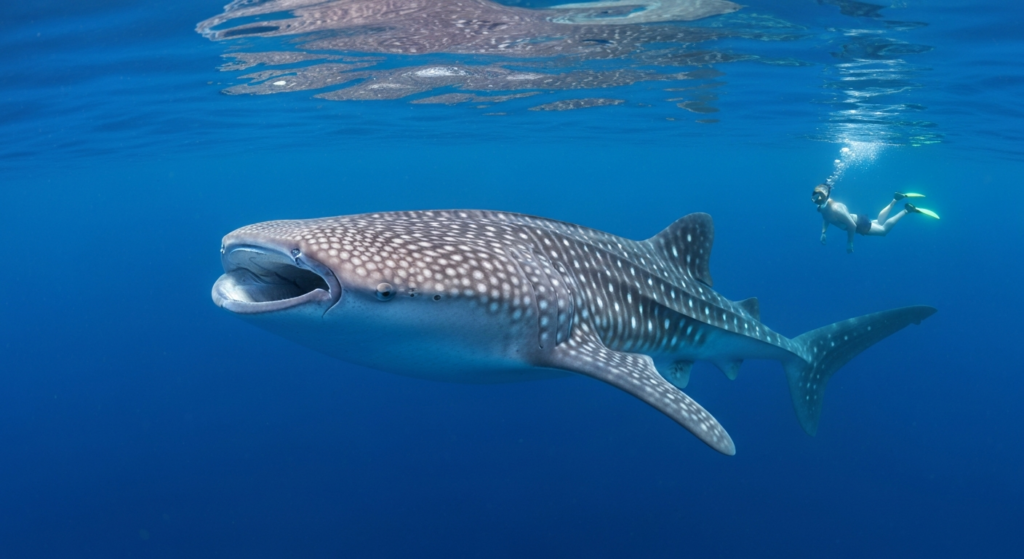
Whale Shark Encounters in Raja Ampat
The whale shark—the largest fish in the ocean, capable of reaching lengths exceeding 12 meters and weights of over 20 tons—represents one of Raja Ampat’s most thrilling wildlife encounters. Unlike the nearby Cenderawasih Bay where whale sharks congregate around fishing platforms, Raja Ampat offers genuinely wild encounters with these magnificent filter feeders as they patrol nutrient-rich waters during seasonal plankton blooms. Spotting a whale shark in Raja Ampat is a moment of pure, unscripted natural wonder that ranks among the ocean’s most coveted wildlife experiences.
Whale sharks visit Raja Ampat’s waters primarily during the wet season from November through March, when monsoon-driven upwellings create plankton concentrations that attract these massive filter feeders. The northern passages around Wayag and Kawe Island, where deep oceanic waters meet shallow reef platforms, are the most productive areas for encounters. While sightings are never guaranteed—whale sharks are pelagic animals that move across vast oceanic distances—experienced local captains who understand current patterns and seasonal rhythms significantly improve the probability of encounters.

Where to Find Whale Sharks
Northern Wayag Passages
Deep channels between Wayag’s karst islands where nutrient-rich currents attract pelagic species. Whale sharks patrol these passages following plankton concentrations. Best accessed by liveaboard during November-March expeditions.
Kawe Island Area
Remote northern sector where oceanic upwellings create productive feeding grounds. Whale shark sightings correlate with plankton blooms visible as green-tinged water. Extended liveaboard itineraries reach this area during peak season.
Dampier Strait Transits
Opportunistic encounters occur as whale sharks transit the nutrient-rich Dampier Strait between Waigeo and Batanta. Though less predictable than northern sites, multiple sightings are reported each season by dive operators and liveaboard crews.
Whale Shark Biology & Behavior
Despite their enormous size, whale sharks are gentle giants that feed exclusively on plankton, fish eggs, and small schooling fish. They filter massive volumes of water through their wide, flattened mouths, using specialized gill rakers to trap tiny organisms while expelling water. A single whale shark can filter over 6,000 liters of water per hour, making them one of nature’s most efficient filter-feeding machines. Their distinctive pattern of pale spots and stripes on a dark blue-grey background is unique to each individual—like fingerprints—allowing researchers to identify and track specific animals across years of study.
Whale sharks are highly migratory, traveling thousands of kilometers across ocean basins following seasonal plankton blooms and spawning events. Satellite tagging studies have tracked individuals making transoceanic journeys, diving to depths exceeding 1,800 meters during their travels. Raja Ampat’s whale shark visitors likely form part of a larger Indo-Pacific population that moves between feeding grounds throughout Indonesia, the Philippines, and the broader Coral Triangle region.
Despite decades of research, much about whale shark biology remains mysterious. Scientists have never observed whale shark mating or birthing in the wild. Females are thought to give birth to live young after exceptionally long gestation periods, with litter sizes potentially reaching 300 pups—though only one pregnant whale shark has ever been scientifically examined. Their longevity is estimated at 80-130 years, making them among the longest-lived vertebrates on Earth.
Best Season & Conditions
The optimal whale shark season in Raja Ampat runs from November through March, coinciding with the northwest monsoon that drives nutrient upwellings and plankton production in northern waters. During this period, surface plankton concentrations are visibly higher, and whale sharks move into shallower waters to feed. Sea conditions can be rougher during monsoon months, making liveaboard vessels the most comfortable and practical way to access northern whale shark areas.
Water temperatures during whale shark season range from 27-30°C with variable visibility from 10-25 meters depending on plankton density. Ironically, reduced visibility often correlates with better whale shark encounters—the animals congregate where plankton is thickest, which naturally reduces water clarity. Experienced guides use this knowledge to target areas where greenish, plankton-rich water meets clear blue ocean—the boundary zones where feeding whale sharks are most likely found.
Responsible Whale Shark Interactions
Swimming with whale sharks carries a responsibility to ensure that human interactions don’t disturb these vulnerable animals. Raja Ampat follows strict codes of conduct for whale shark encounters: maintain minimum 3-meter distance, never touch or ride whale sharks, don’t use flash photography, approach from the side rather than head-on, limit group sizes in the water, and never block a whale shark’s swimming path. These guidelines protect the animals while ensuring meaningful, respectful encounters.
Whale sharks are classified as Endangered on the IUCN Red List, making conservation of their Raja Ampat habitat critically important. Indonesia’s 2013 protection of whale sharks throughout its waters was a landmark conservation achievement, and Raja Ampat’s marine protected area network provides additional safeguards. Visitors who encounter whale sharks can contribute to research by photographing the unique spot patterns behind the gills and submitting images to global identification databases like Wildbook for Whale Sharks.
Frequently Asked Questions
When is the best time to see whale sharks in Raja Ampat?
The best season for whale shark encounters in Raja Ampat is November through March, when plankton blooms attract these filter feeders to northern waters around Wayag and Kawe Island. Sightings are possible but less common during the dry season from April to October. Unlike manta rays, whale shark encounters require dedicated searching and are never guaranteed.
How big are Raja Ampat’s whale sharks?
Whale sharks encountered in Raja Ampat typically range from 4-8 meters in length, though individuals exceeding 10 meters have been reported. The species can grow to over 12 meters and weigh more than 20 tons, making them the largest fish in the world. Despite their size, they are harmless filter feeders that pose no danger to swimmers.
Can I snorkel with whale sharks?
Yes, snorkeling is actually the preferred method for whale shark encounters since the animals typically feed at or near the surface. Divers often find that whale sharks swim away from the bubbles produced by scuba equipment. Free diving and snorkeling allow closer, quieter approaches. A good snorkeling ability and comfort in open water are essential, as encounters often occur in blue water away from reefs.
What is the difference between whale sharks in Raja Ampat vs Cenderawasih Bay?
Raja Ampat offers wild, unpredictable whale shark encounters where animals are found through active searching in open ocean. Cenderawasih Bay, located east of Raja Ampat, features whale sharks that congregate around traditional fishing platforms (bagans) where they feed on baitfish. Cenderawasih offers more reliable sightings, while Raja Ampat provides more authentic wild encounters without human-altered feeding behavior.
Encounter the World’s Largest Fish
Plan your whale shark expedition during peak season with our marine experts.